


Ukraine faces a critical shortage of human resources, which has been further exacerbated by the ongoing war and the resulting migration crisis. One potential solution to this challenge is the reskilling of various demographic groups, including women and older workers. On September 25, at the IX Conductors of Changes Forum, Gradus Research and Deloitte Ukraine presented the results of a survey on Ukrainians’ willingness to switch careers, the barriers and motivations behind this shift, and the potential for women to retrain for traditionally male-dominated fields. The survey also examined whether Ukrainians are open to working past retirement age and under what conditions.
Ukraine’s Human Capital Crisis: Will Reskilling Help?
Despite the ongoing wartime challenges, Ukraine’s employment levels remain relatively high—79% of respondents are currently employed full- or part-time, with 58% working more than 30 hours a week.
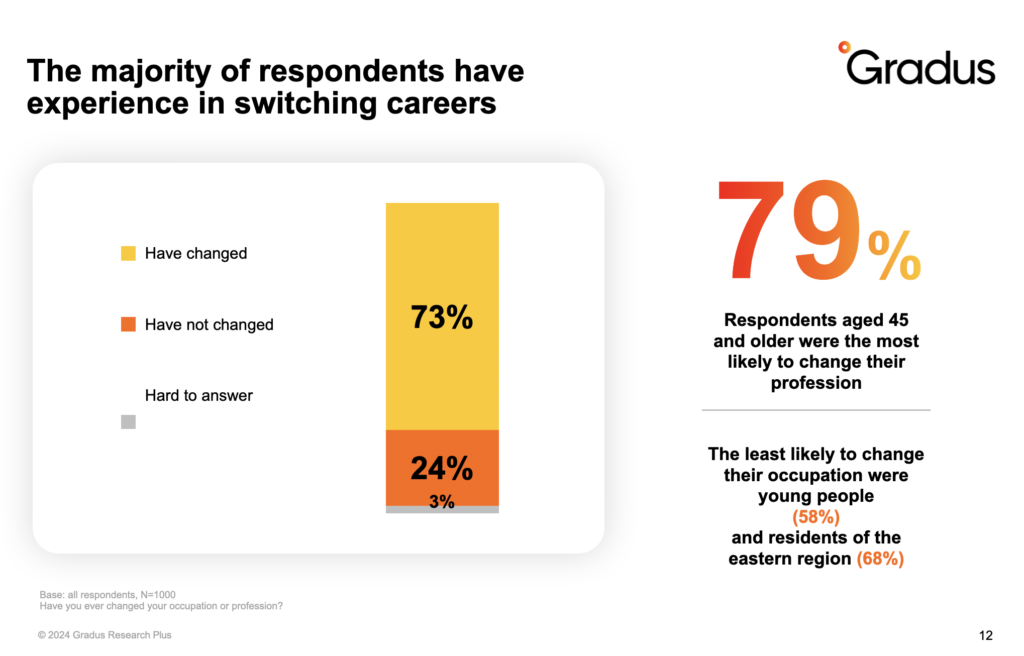
Over three-quarters of Ukrainians (73%) have changed professions at some point in their careers. Notably, 79% of those aged 45 and older have switched jobs, whereas younger people (58%) and residents of Eastern Ukraine (68%) have changed careers the least.
Training and Upskilling: A Growing Trend
One-third of respondents (31%) pursue additional training or professional development at least once a year. Women and younger workers tend to engage in further education more frequently than other groups.
Women and Older Workers: Ready for Change?
- 45% of women are open to retraining for a new profession, including roles traditionally seen as male-dominated. Younger people, and those from Western and Northern Ukraine, are particularly inclined to pursue these opportunities.
- 73% of respondents are open to working beyond retirement age, with many expressing a desire to remain in their current profession.
Openness to Reskilling: The Key to Economic Recovery
“Ukraine has demonstrated remarkable resilience under high levels of turbulence, and this is a strength. Ukrainians have adapted to wartime life, are actively engaged in the workforce, and are eager to retrain. However, while most people are open to new career opportunities and lifelong learning, 88% of respondents said they would be motivated to learn new skills if it led to higher earnings,” commented Evgeniya Blyznyuk, sociologist and CEO of Gradus Research.
“Ukraine has vast potential to engage underrepresented groups—such as women, older workers, and younger people—in the workforce. Many of them are open to new opportunities, ready to learn, and willing to change careers. However, challenges remain, including a lack of experience with career shifts and a limited number of workers who have pursued additional training (31% among older workers). Moreover, 41% of older respondents and 43% of women are not considering retraining for male-dominated fields,” said Olena Boichenko, Partner at Deloitte Ukraine.
Who Should Be Retrained for Male-Dominated Fields?
- 50% of respondents believe women should be the primary focus for retraining into traditionally male professions, followed by veterans (44%), people with disabilities (43%), and older workers (42%).
Stress and Burnout: An Ongoing Challenge
The survey also revealed that the stress and burnout levels among Ukrainian women are increasing. 45% of women reported higher stress levels compared to the previous year, while 38% felt more burnt out.
Full Survey Report
The survey provides insights into the employment landscape in Ukraine, including:
- Employment and unemployment reasons
- Career changes and the frequency of those changes
- Training and professional development habits
- Openness to new professions and lifelong learning
- The potential for retraining in male-dominated industries
- The willingness to work beyond retirement age
To purchase the full report, please contact dn@gradus.app.


